


Table of Contents
- Build Quality: The Biggest Factor in Garden Room Cost
- SIP Panels vs Stud Walls: Structural Choices That Change the Price
- Composite Cladding vs Basic Timber: Cost vs Longevity
- Foundation Types and How They Influence Price and Stability
- Insulation Standards and Year-Round Performance
- Internal Finishes and the Cost of a “House-Like” Feel
- Heating, Electrics & Services: The Hidden Cost of Usability
- Warranties, Guarantees & Aftercare: What Long-Term Value Looks Like
- Why Higher-Quality Garden Rooms Cost More Over Time
- Premium Doors & Windows vs Cheap Alternatives
- Conclusion
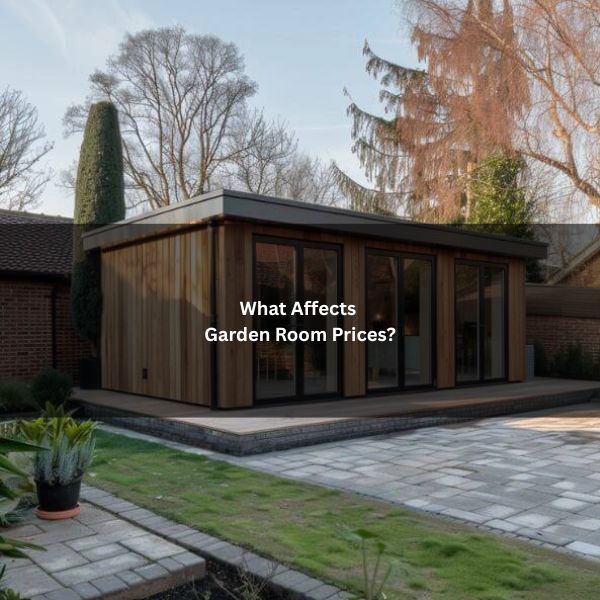
Garden room prices shift with build quality, structure, and finish. Materials like SIP panels or timber frames impact strength and cost. Cladding choices change durability and aesthetics. Foundations determine stability and budget. Insulation dictates year-round comfort and energy use. Interior finishes, from plaster to electrics, push costs toward a house-like feel. Doors and windows affect security and efficiency. Regulations and resale potential add another layer.
Knowing which factors matter most can reshape expectations, and priorities, especially when viewed alongside a full breakdown of how much a garden room costs.
Build Quality: The Biggest Factor in Garden Room Cost
Although size and features attract attention, build quality drives most of a garden room’s price. Material grade, workmanship, and weatherproofing standards determine longevity and maintenance costs, so higher initial spend often reduces lifetime expense.
Premium joinery, accurate tolerances, and careful sealing prevent drafts, leaks, and movement, protecting finishes and electrics.
Specification choices signal build quality. Engineered timber, certified moisture-resistant boards, and robust roof membranes outperform budget alternatives. High-quality doors and glazing improve thermal performance and security. Durable cladding with proper ventilation gaps resists warping and decay.
Correct foundations and load paths keep structures stable and square.
Quality control matters. Reputable installers document methods, offer warranties, and follow best practice on vapour control, fixings, and trims. Consistency across components ensures predictable performance and preserves value.
Higher-spec insulated garden rooms typically command a higher upfront cost but deliver better long-term value.
SIP Panels vs Stud Walls: Structural Choices That Change the Price
Structure sets the baseline for cost, and the choice between SIP panels and traditional stud walls drives major differences in price, performance, and installation time.
SIPs arrive as prefabricated, insulated panels that reduce labor hours and site disruption, but they carry higher upfront material costs. Stud walls use timber framing with cavity insulation; materials are cheaper, yet labor, thermal bridging, and air-sealing complexity can raise total spend over time.
For buyers, the decision hinges on budget timing, energy goals, and construction speed.
- Upfront costs: SIPs higher materials; studs higher labor variance.
- Thermal performance: SIPs deliver tighter envelopes; studs depend on meticulous detailing.
- Speed: SIPs assemble quickly; studs extend timelines and site exposure.
- Services routing: studs offer easy voids; SIPs need planned chases.
Composite Cladding vs Basic Timber: Cost vs Longevity
While both materials can achieve a similar aesthetic at first glance, composite cladding and basic timber diverge sharply in lifecycle cost and upkeep.
Composite usually carries a higher upfront price due to engineered boards and specialised fixings. However, it resists rot, warping, and insect damage, retaining colour with minimal maintenance. Owners typically avoid repainting and infrequent replacement, lowering long-term spend.
Basic timber generally costs less to buy and install, appealing to tight budgets. Yet its porous nature demands periodic sealing or staining, and boards may need replacement if moisture ingress or UV degradation occurs.
Over a 10–20 year horizon, those maintenance cycles add labour and material costs. Buyers weigh initial savings against scheduled upkeep, aesthetic ageing, and warranties that can extend composite’s value proposition.
Foundation Types and How They Influence Price and Stability
Even before wall panels go up, the foundation choice sets both the budget and the building’s long‑term stability.
Site conditions, soil type, access, and load determine whether simple pads suffice or a full slab is warranted. Upfront price must be weighed against settlement risk, moisture control, and future maintenance. Accurate ground assessment prevents over‑engineering or costly failures.
- Ground screws: Quick installation, minimal excavation, ideal for roots or poor access; mid‑range cost; adjustable for level tolerance.
- Concrete slab: Highest stability and durability; best for heavy rooms or integrated services; most expensive and time‑consuming.
- Concrete pads and timber beams: Cost‑effective, faster than slabs; suitable for lighter rooms; requires precise spacing and ventilation gaps.
- Compactable gravel and paving: Lowest cost; relies on excellent drainage and compaction; limited for larger spans.
Insulation Standards and Year-Round Performance
Although aesthetics often dominate early decisions, insulation standards ultimately dictate whether a garden room is comfortable and economical across seasons.
Specifying higher-performing insulation in walls, floor, and roof reduces heat loss, cuts energy bills, and expands usable months without aggressive heating or cooling. Buyers encounter options ranging from minimal quilt infill to rigid boards, hybrid systems, and SIPs, each with different U-values and costs.
Thermal bridging control, airtightness, and vapour management materially affect performance and longevity. Proper taping, membranes, and installation quality can rival upgrades in insulation thickness.
Glazing specification is pivotal: double or triple glazing, warm-edge spacers, and low-e coatings stabilise temperatures and prevent condensation. Regional climate and orientation also matter; colder or exposed sites benefit from thicker build-ups and improved detailing, offsetting higher upfront prices through lower operational costs.
Internal Finishes and the Cost of a “House-Like” Feel
Insulation determines comfort, but the interior surfaces shape daily experience and budget. A “house-like” finish typically means plastered walls, painted ceilings, skirting, concealed cabling, and fitted flooring, each adding labour and materials.
Choices such as laminate versus engineered timber, MDF versus hardwood trim, and flush downlights versus surface fixtures create distinct cost tiers. Wet plaster and full mist coats deliver a seamless look but require drying time and skilled trades, while plasterboard with taped joints is faster and cheaper.
Storage walls, acoustic panels, and integrated media points raise complexity and price.
- Wall and ceiling finish: plaster skim, tape-and-joint, or timber cladding.
- Flooring: vinyl, laminate, engineered wood, or carpet tiles.
- Electrical detailing: recessed lighting, sockets, data, dimming.
- Joinery and trim: skirting, architraves, built-ins, paint quality.
Heating, Electrics & Services: The Hidden Cost of Usability
A garden room may look complete from the outside, but its usefulness hinges on the quality and scope of its services. Heating, electrics, and data infrastructure often separate a seasonal space from one that performs like a true extension of the home.
Heating choices influence both upfront cost and long-term comfort. Wall-mounted electric panels, underfloor heating, and aircon / wall mounted heaters each carry different installation demands, control options, and running costs. Cheaper systems may warm the air quickly but struggle to maintain stable temperatures in winter or summer.
Electrical specification also varies widely. A basic fit may include limited sockets and surface-mounted cabling, while higher-spec builds integrate recessed lighting, multiple circuits, external trenching, and dedicated consumer units. Data cabling, ethernet points, and Wi-Fi provision add further complexity, particularly for home offices or studio use.
These services require careful coordination during construction. Retrofitting later is disruptive and costly, so higher-quality builds price these elements correctly from the outset, reflecting the labour, certification, and long-term reliability involved.
Warranties, Guarantees & Aftercare: What Long-Term Value Looks Like
The true cost of a garden room extends beyond completion day. Guarantees and aftercare determine whether the structure remains an asset or becomes a maintenance burden over time.
Well-built garden rooms typically come with 10-year structural guarantees, reflecting confidence in the frame, foundations, and overall construction method. These guarantees rely on documented build processes, compliant materials, and correct installation, not just headline specifications.
Material warranties also matter. Cladding, glazing, membranes, and insulation each carry their own performance expectations, and higher-quality components tend to offer longer, clearer coverage. Just as important is workmanship assurance: how issues are handled if movement, settlement, or minor defects appear.
Aftercare completes the picture. Established installers provide continuity, inspections where needed, and a clear point of contact years after installation. This support is factored into the price, but it protects both the building and the buyer’s peace of mind, preserving value well beyond the initial outlay.
Why Higher-Quality Garden Rooms Cost More Over Time
While the upfront price tag draws attention, the long-run cost profile is shaped by durability, maintenance, energy performance, and retained value.
Higher-spec structures typically use robust frames, weatherproof cladding, quality membranes, and superior insulation. These elements resist moisture creep, movement, and thermal bridging, reducing repair cycles and protecting interior finishes.
Operating costs also diverge. Better insulation, airtightness, and controlled ventilation lower heating requirements and stabilise internal conditions, cutting annual bills and extending component lifespans.
Premium roofing and foundations resist settlement and leaks, avoiding remedial work that often exceeds initial savings from cheaper builds.
Depreciation differs too. A well-built, well-performing garden room holds aesthetic and functional integrity, enhancing resale appeal and potential property value uplift.
Over a 10–20 year horizon, these compounding advantages typically outweigh the initial price delta.
Premium Doors & Windows vs Cheap Alternatives
A key price driver is the choice between premium glazing systems and budget doors and windows.
Premium units typically feature thermally broken aluminium frames, low-e double or triple glazing, and precision hardware, delivering superior insulation, security, and longevity.
Cheaper PVC or softwood alternatives reduce upfront costs but can compromise energy performance, weather resistance, and long-term reliability, affecting heating bills and maintenance schedules.
Buyers should weigh lifecycle value, not headline price.
- Thermal performance: Lower U-values reduce heat loss, improve comfort, and shrink HVAC loads.
- Durability: Powder-coated aluminium and stainless hardware resist warping, rot, and corrosion.
- Security: Multi-point locks, laminated panes, and PAS 24 compliance deter forced entry.
- Operation and aesthetics: Smooth-running sliders/bi-folds, slimmer sightlines, and better daylight elevate usability and resale appeal.
Conclusion
In the end, garden room pricing reads like a tale of contrasts: SIPs against stud walls, composite cladding against bare timber, robust foundations against shaky shortcuts. Premium insulation whispers of winter warmth while thin layers rattle in the wind. House-like finishes invite lingering; sparse interiors urge a swift exit. Solid locks quiet worry; flimsy panes court risk. Upfront savings gleam briefly; long-term value stands steady. Buyers face a simple tension: pay less now, or invest in comfort, compliance, and resale.