


Table of Contents
- Designing Your Garden Music Studio
- Soundproofing Techniques for Your Studio
- Essential Equipment for a Garden Music Room
- Maximising Creativity in Your Garden Studio
- Climate Considerations for Your Garden Music Studio
- Combined Garden Music Studio and Home Office
- Compact Guitar Studio with Wall-Mounted Storage
- Creative Garden Studio with Feature Slatted Wall

Creating a garden music studio can be a dream for many musicians, providing a dedicated space away from the distractions of the home. This article explores the best ideas for designing an acoustic practice room within your garden, ensuring it’s a functional and inspiring environment for your musical pursuits.
Designing Your Garden Music Studio
Choosing the Right Location
Selecting the right location is crucial when planning your garden music studio. Consider the distance from your home and neighbors to minimise noise disturbances. Assess the ground’s levelness and proximity to trees, which might affect the studio’s foundation. Aim for a spot that balances accessibility with minimal external interference, ensuring a peaceful environment for music practice.
Incorporating Acoustic Solutions
Incorporating acoustic solutions is vital for a garden music studio designed for music practice. Integrating sound absorption materials like acoustic foam and panelling can significantly reduce reverberation and enhance sound clarity. Think about using dense materials for windows and doors to prevent sound leakage. Prioritise good acoustics. This creates a space that’s optimised for recording and musical creativity.
Integrating with Garden Aesthetics
Integrating your garden music studio with the existing garden aesthetics ensures it complements the outdoor space. Consider using timber cladding to blend the studio with natural surroundings. Design the studio with ample natural light to create an inspiring environment. Harmonising the design with the garden’s elements enhances the studio’s appeal and makes it a seamless addition to your home.
Soundproofing Techniques for Your Studio
Effective Soundproofing Materials
To effectively soundproof your garden music studio, select the appropriate sound insulation materials. Dense plasterboard, rubber underlay, and EPDM are excellent choices for blocking noise transmission. These materials increase the mass of the walls, roof, and floor, preventing sound waves from escaping. Proper soundproofing will help keep the peace, making your music practice sessions private.
Building a Soundproof Room
Building a soundproof room within your garden involves several key steps. Start by insulating the walls, ceiling, and floor with dense materials. Use acoustic sealant to fill gaps and cracks, preventing sound from leaking through. A double-wall construction with an air gap can further enhance sound insulation. Remember to address the roof, ensuring it is well-insulated to minimise noise pollution.
Managing External Noise
Managing external noise is essential for a peaceful garden music studio. Consider installing soundproof windows and doors to block external sounds. Planting dense shrubs and trees around the studio can also help absorb external noise. Addressing these external factors allows for a dedicated space that’s free from unwanted disturbances, making it perfect for recording.
Essential Equipment for a Garden Music Room
Recording Instruments and Gear
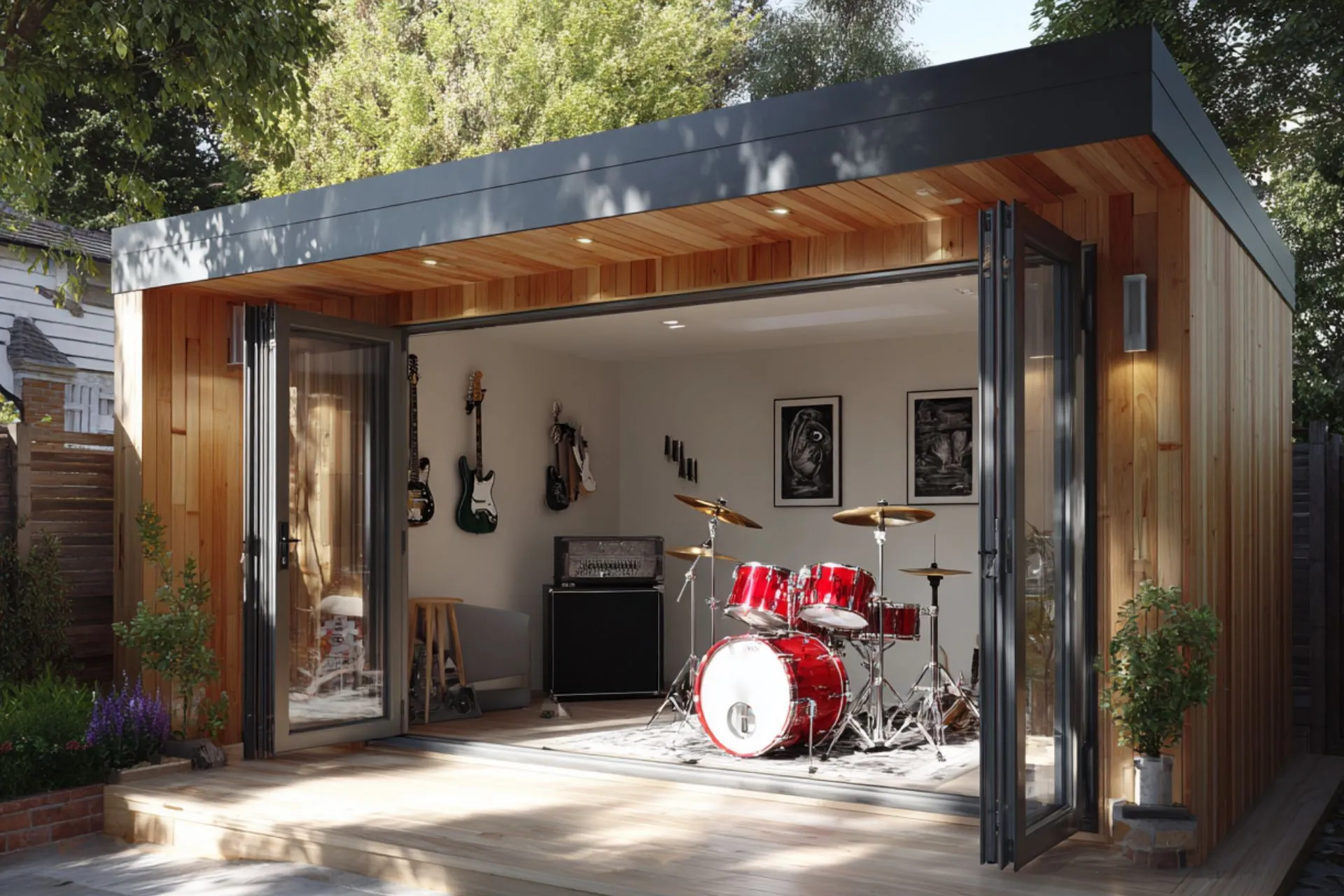
Equipping your garden music room involves carefully selecting instruments and gear to suit your musical style. Whether you favour the guitar, piano, violin, or drum, ensure they fit comfortably within the space. Investing in high-quality instruments is essential for achieving optimal sound and performance during music practice and recording sessions in your studio.
Acoustic Treatment Tools
Acoustic treatment tools are essential components for optimising the acoustics within your garden music room. Sound absorption materials like foam and panelling can effectively reduce echo and reverberation, providing a clearer, more professional sound. Strategically placing these acoustic solutions throughout the space ensures that your recordings are crisp and free from unwanted noise, enhancing the overall creative environment.
Technology for Home Recording
Integrating technology for home recording transforms your garden music studio into a professional-grade creative hub. Invest in quality microphones, audio interfaces, and recording software to capture your musical performances with clarity and precision. This equipment allows you to experiment with different sounds, perfect your technique, and produce high-quality recordings from the comfort of your dedicated space.
Maximising Creativity in Your Garden Studio
Creating an Inspiring Atmosphere
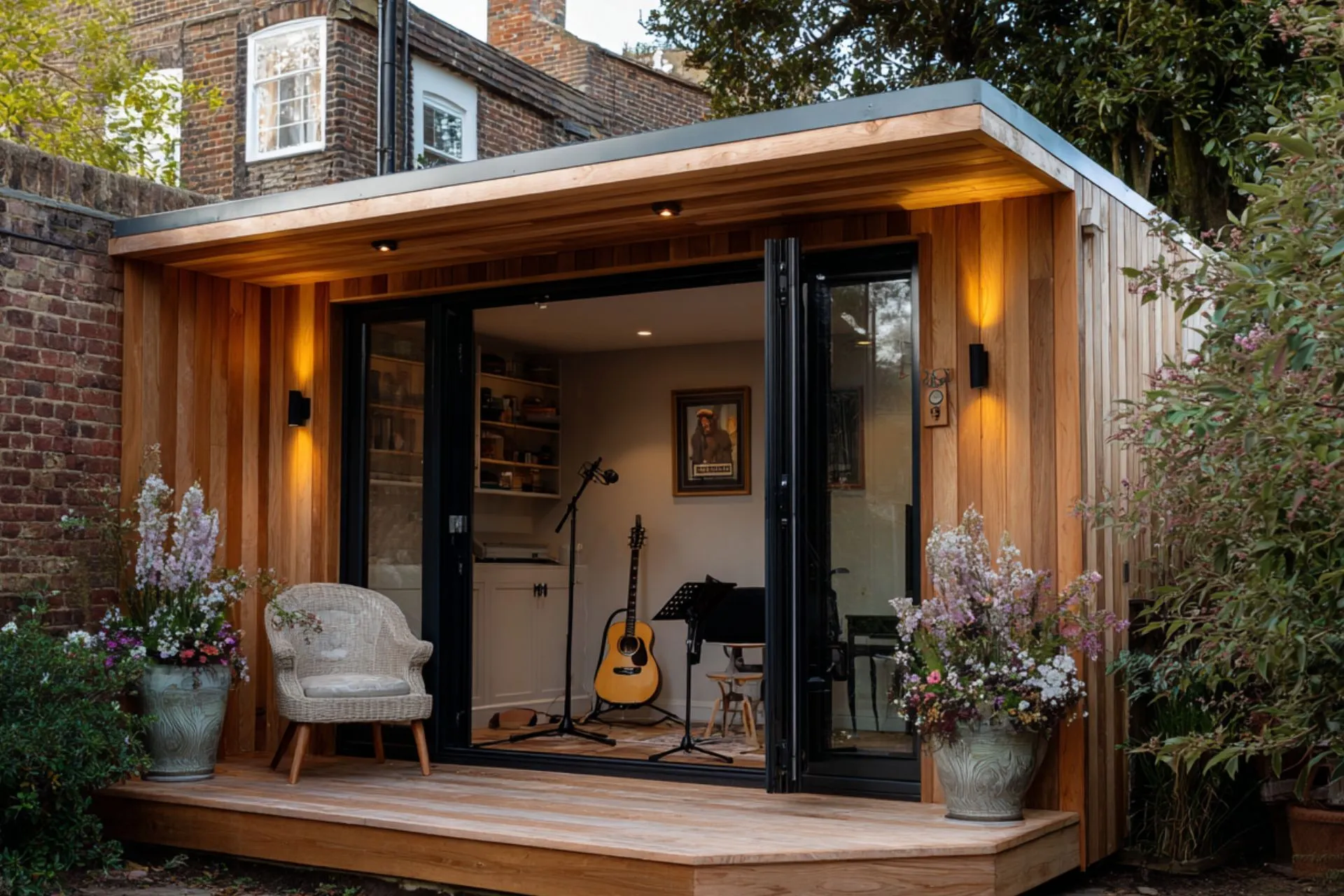
Creating an inspiring atmosphere within your garden music studio involves paying attention to design, decor, and the overall ambience. Use colour palettes, artwork, and musical memorabilia that inspire creativity and passion. This tailored environment serves as a retreat, fostering a productive and enjoyable space for music practice and recording sessions, far from the disturbances of the home.
Utilising Natural Light and Views
Utilising natural light and views can significantly enhance your garden music room, making it a vibrant and uplifting space. Design the studio to maximise sunlight exposure through ample windows or skylights, connecting you with the outdoors. Integrating views of your garden provides a calming backdrop, stimulating creativity and reducing stress during long music practice sessions in your small studio.
Are you considering a small outdoor space for hybrid use? Possibly a music room that seconds up as an office… If you are, have a look at our top ideas for small garden rooms to help plan your garden space.
Incorporating Relaxation Spaces
Incorporating relaxation spaces within your garden music studio creates a balanced environment for both productivity and rejuvenation. Integrate a comfortable seating area, such as a sofa or lounge chair, where you can unwind and recharge during breaks. This provides a dedicated space to relax and mentally prepare for your next musical endeavour, enhancing your overall well-being and creative output in your outdoor studio.
Climate Considerations for Your Garden Music Studio
Temperature Control Solutions
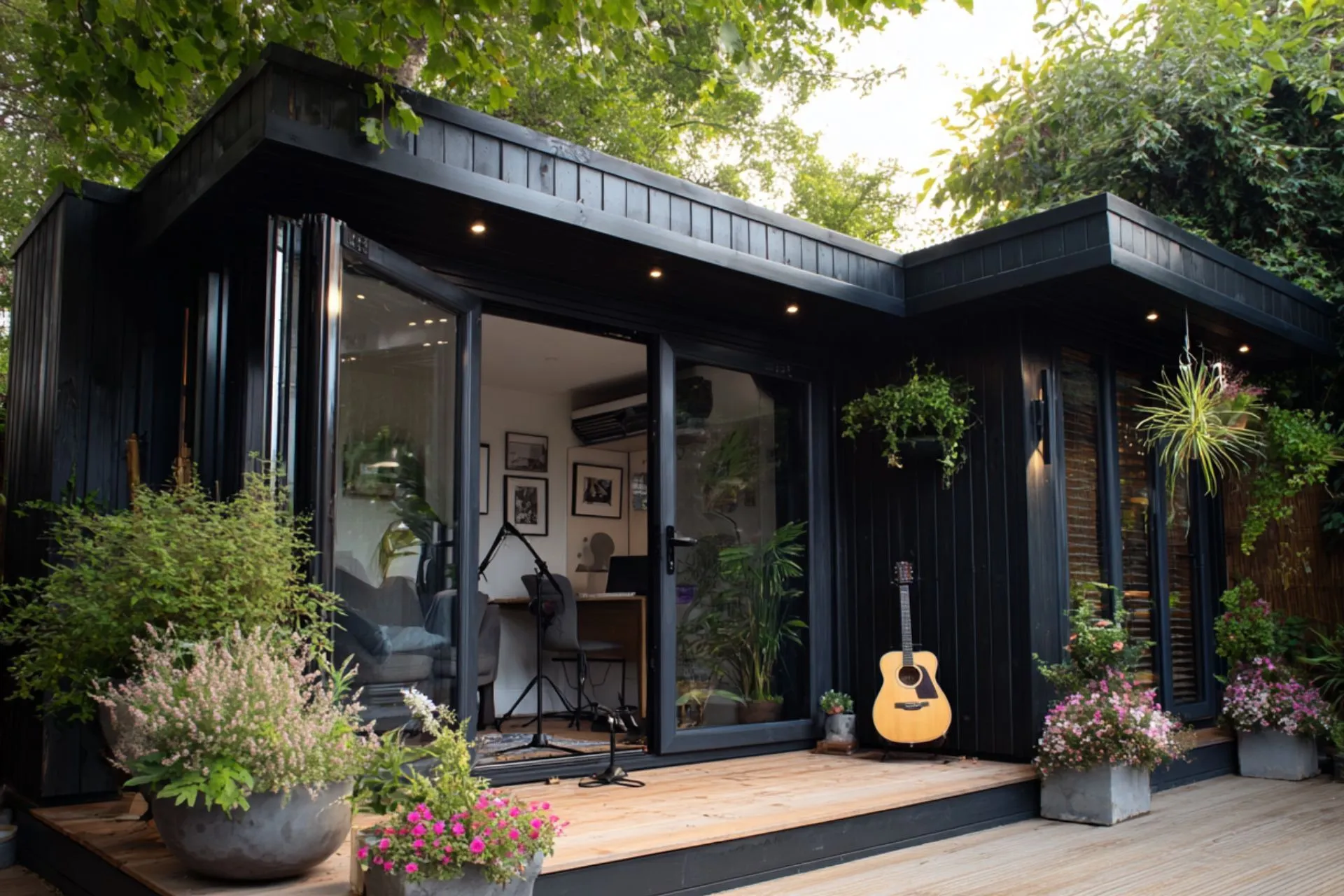
Maintaining optimal temperature is critical for your garden music room, especially during extreme weather. Consider installing a heating system for colder months to keep both you and your instruments at a comfortable temperature. In the summer, air conditioning or a fan can prevent the space from overheating. Effective insulation is essential to maintain a consistent temperature, reducing the need for excessive heating or cooling in your dedicated garden music studio.
Humidity Management Techniques
Managing humidity is key to protecting your instruments and maintaining the acoustics of your garden music studio. High humidity can damage wooden instruments, while low humidity can cause them to crack. Using a dehumidifier during humid months can help to regulate the moisture levels. Conversely, a humidifier can add moisture during dry periods, preserving your equipment and enhancing the musical environment in your garden music room.
Seasonal Use of the Garden Room
Planning for seasonal use is important for a garden room. Consider how you will use the space throughout the year. In the summer, ensure there is adequate ventilation to keep the area cool. In the winter, focus on insulation to retain heat. Planning ensures that your music room is a usable and comfortable dedicated space, regardless of the season, making it a valuable asset all year round.
Combined Garden Music Studio and Home Office
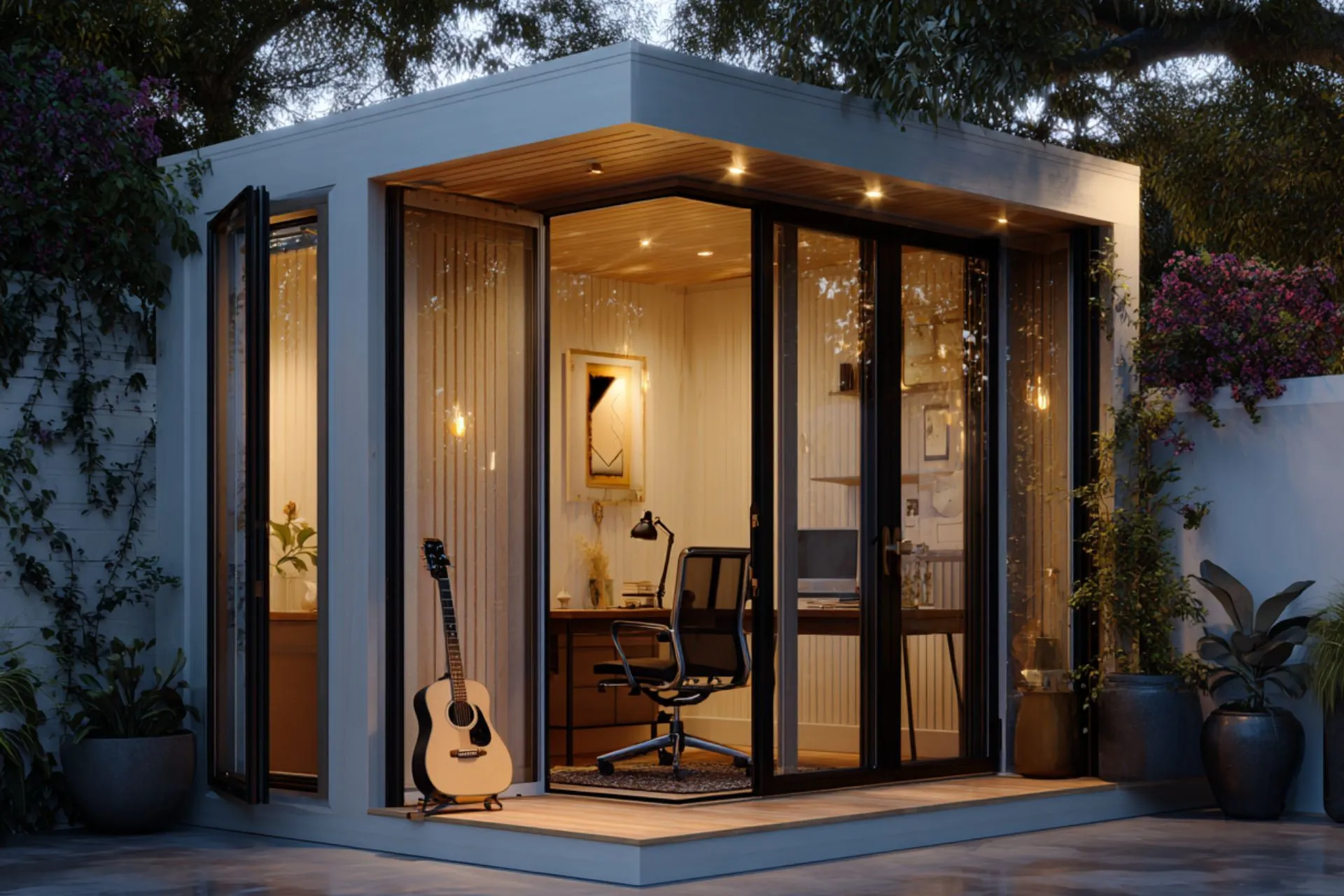
Combining a garden music studio with a home office maximises the utility of your outdoor space. By designing a dual-purpose room, you can create a dedicated area for both music practice and work, ensuring a seamless transition between creative and professional tasks. Soundproofing is crucial to prevent noise distractions, and ample storage can help to keep the space organised and functional. Consider adding features like a comfortable desk, ergonomic chair, and acoustic treatment for the music zone, ensuring that both areas are optimised for their respective purposes.
Compact Guitar Studio with Wall-Mounted Storage
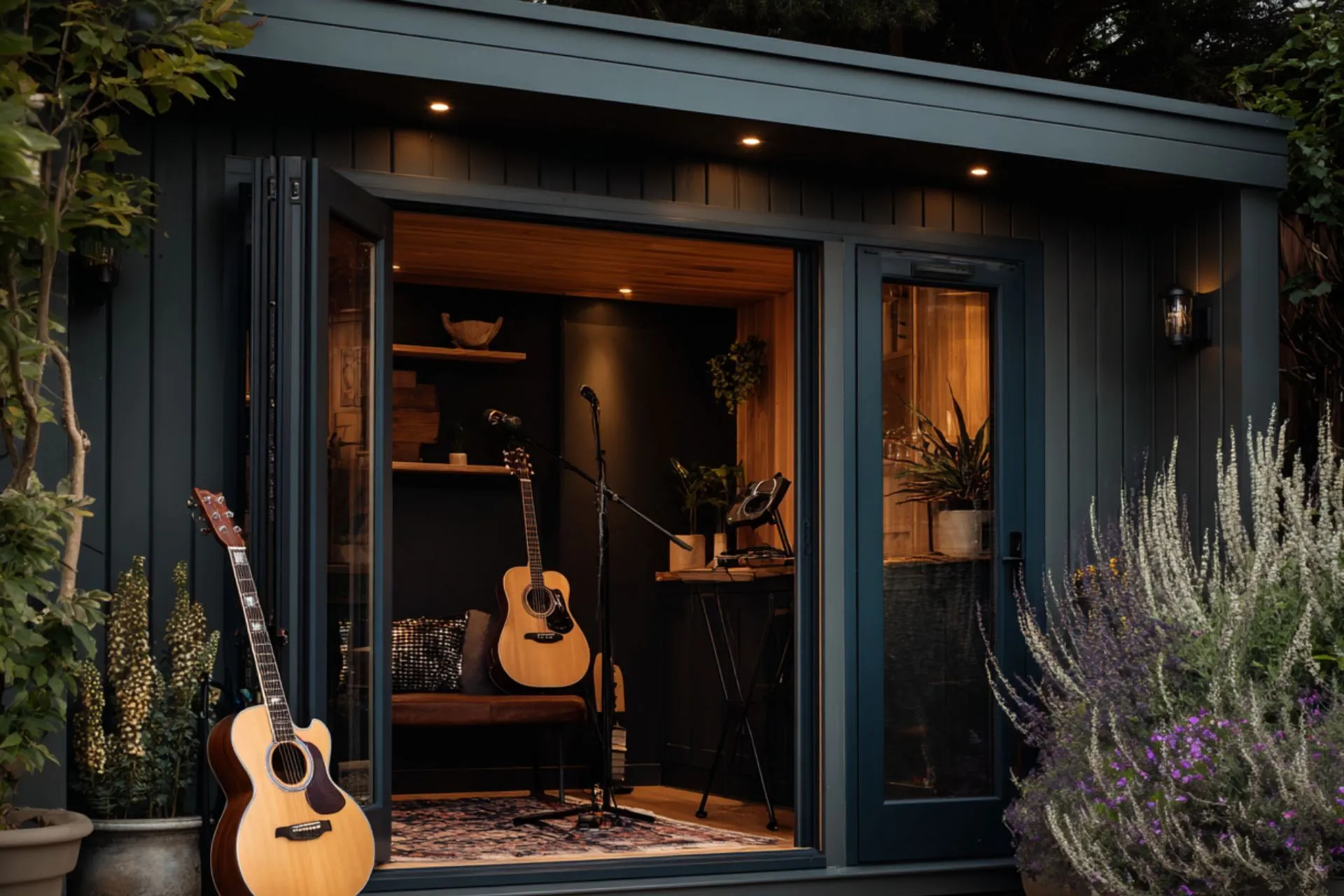
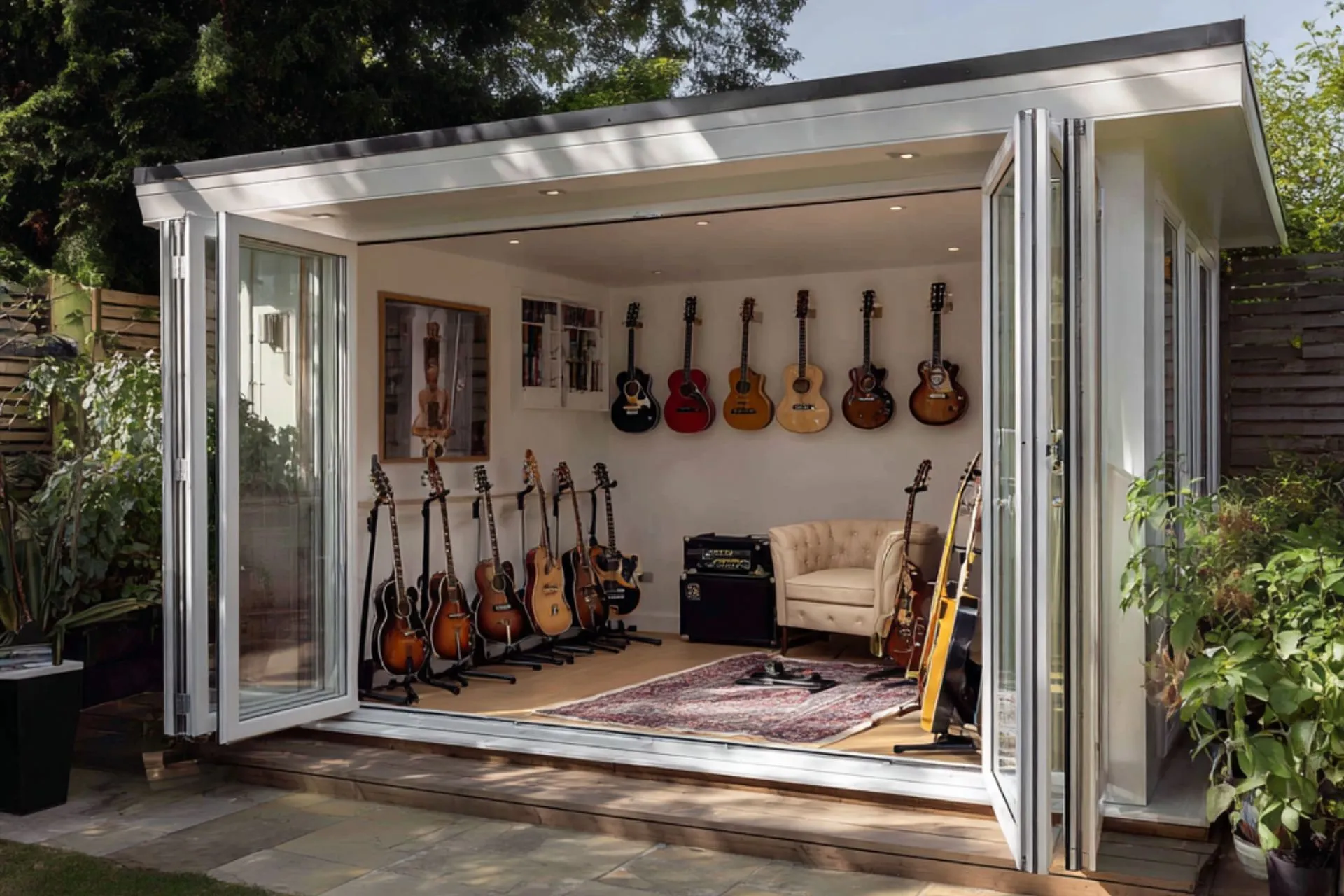
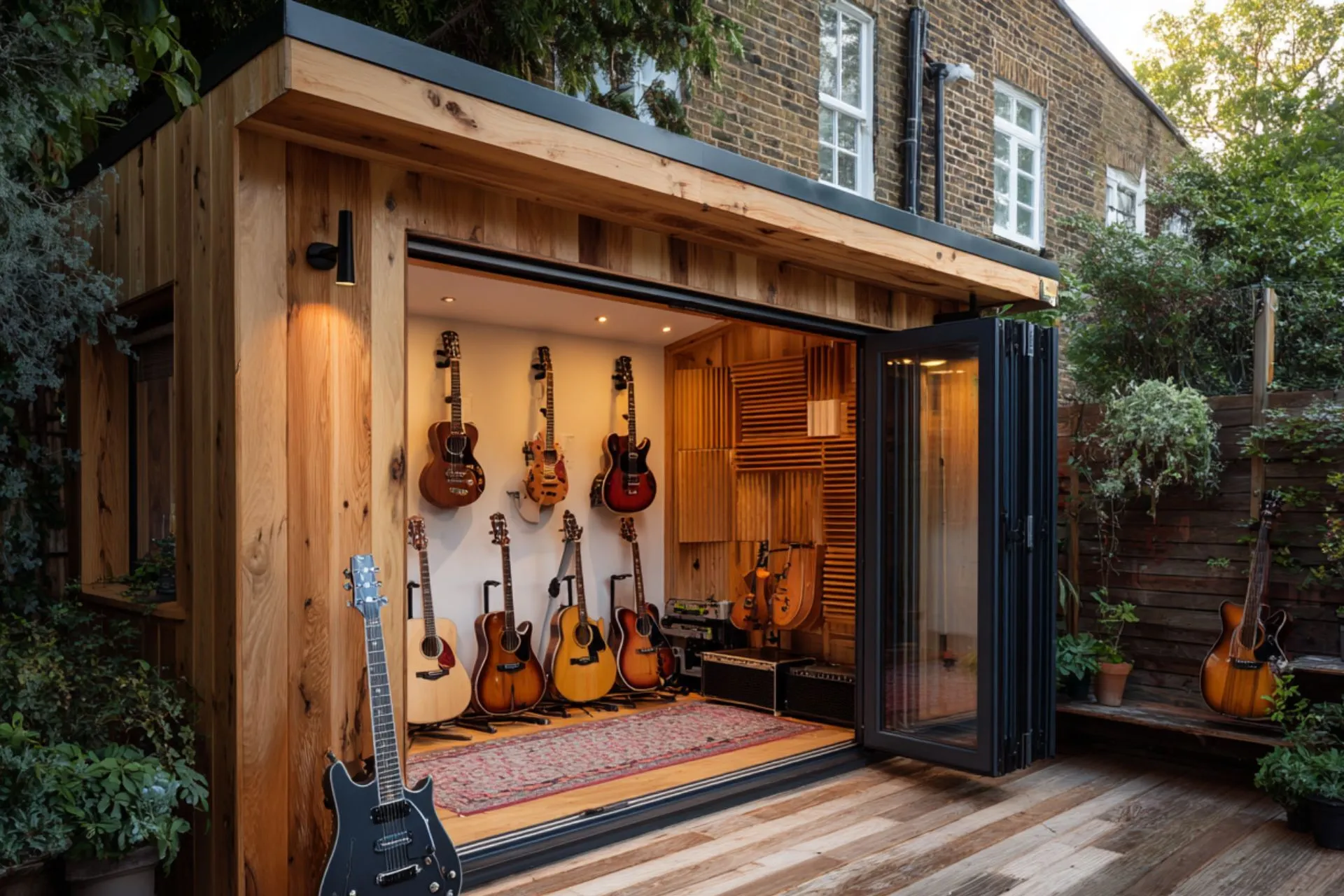
For guitar enthusiasts, a compact garden music studio with wall-mounted storage is an ideal solution for the available space. Wall-mounted guitar racks and shelves save floor space and display your instruments as decor. Incorporate sound absorption panelling to enhance the acoustics, and consider installing ample electrical points for amps and recording equipment. Good lighting and a comfortable chair will complete the space, making it a perfect zone for guitar practice and recording your guitar. The creative use of wall space in a small studio can transform it into a highly functional area.
Creative Garden Studio with Feature Slatted Wall
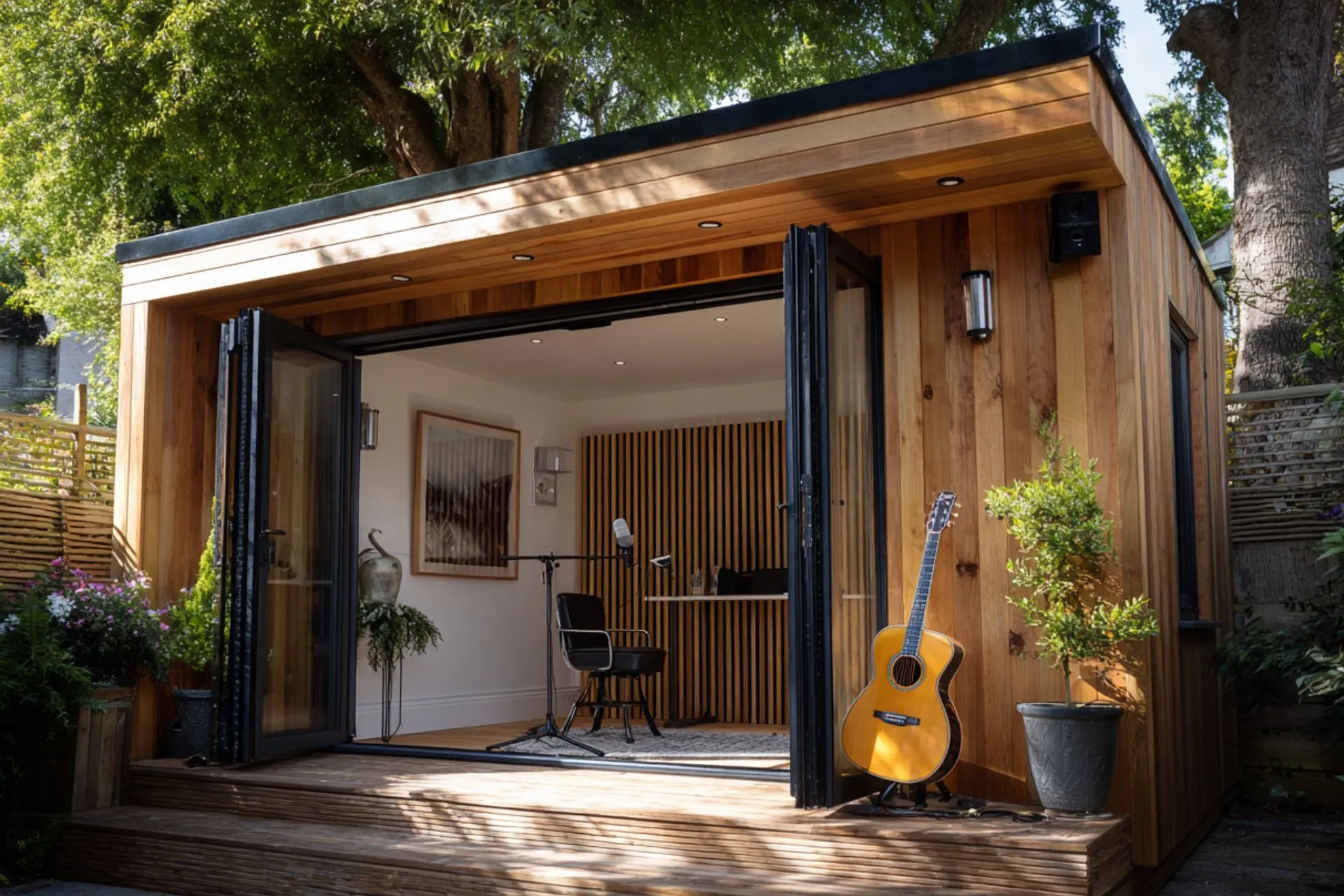
A creative garden studio with a feature slatted wall can be an inspiring addition to your home. The slatted wall serves as both an aesthetic element and an acoustic solution, helping to diffuse sound and reduce echo. This design choice can enhance the overall acoustics of the room and provide a visually appealing backdrop. Consider using timber cladding for the exterior to blend with the outdoor garden environment. Add ample natural light and incorporate plants to create a calming and creative atmosphere, making your studio a true extension of your personal style.