


Table of Contents
- Why Composite Garden Rooms Typically Cost More Upfront
- What You Gain From Composite That Affects Long-Term Value
- Maintenance Savings Compared to Timber Garden Rooms
- Appearance, Durability, and How They Hold Up Over Time
- When Paying More for Composite Makes Sense — and When It Doesn’t
- How to Decide If Composite Is the Right Investment for You
- Conclusion
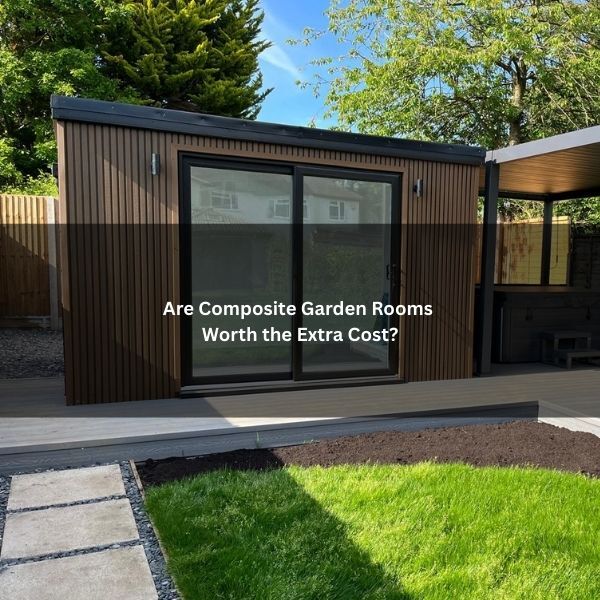
Composite garden rooms carry a higher upfront price, largely due to engineered materials and specialist installation. Yet they promise durability, low upkeep, and stable performance in tough climates. They resist rot, fading, and warping better than timber, and can offer improved insulation and modern aesthetics. The trade-off is cost versus long-term value. For some, that balance pays off; for others, it may not. The key is knowing when the premium truly matters, and when it doesn’t.
Why Composite Garden Rooms Typically Cost More Upfront
Although the sticker price can surprise buyers, composite garden rooms cost more upfront because of their engineered materials, specialised manufacturing, and installation demands. Composites blend polymers with wood fibres or minerals, requiring controlled production to achieve consistent density, weather resistance, and dimensional stability.
For readers who want a deeper understanding of the material itself, our guide on what composite cladding is for garden rooms explains how these engineered boards are made and why they behave differently to timber.
These high-spec boards, trims, and claddings often carry premium procurement costs compared with softwood or basic uPVC.
Precision fabrication adds expense. Panels are pre-profiled for hidden fixings, integrated ventilation paths, and neat joints, necessitating CNC cutting, quality assurance, and tighter tolerances.
Structural systems may use insulated composite wall cassettes, aluminium subframes, and advanced membranes, increasing component complexity.
Professional installation is typically mandatory. Installers need training to handle expansion gaps, drainage detailing, and warranty-compliant assembly.
Foundations may be upgraded to support heavier modular elements and ensure level alignment. Bespoke glazing, coordinated finishes, and factory-colour-matched accessories further lift budgets.
Collectively, these inputs raise the initial invoice before any operational considerations are assessed.
What You Gain From Composite That Affects Long-Term Value
Over time, composite garden rooms deliver measurable value through durability, stability, and lower upkeep. Engineered boards resist swelling, warping, and rot, so structural integrity remains consistent through seasonal moisture cycles.
UV-stable finishes reduce fading and surface degradation, preserving appearance and resale appeal. Integrated thermal performance through insulated panels and tight tolerances supports year-round usability, broadening functional use and improving lifecycle utility.
Material consistency also minimizes movement at joints, protecting seals, doors, and glazing, which lowers the likelihood of costly remedial work. Insect and fungal resistance reduces hidden deterioration that can undermine frames and cladding.
Fire-retardant ratings available in many composite systems enhance safety and compliance, which can be decisive in planning or insurance considerations.
Acoustic performance is another gain; denser skins and cores dampen noise, making studios and offices more practical.
Predictable manufacturing tolerances speed installation and reduce site waste, contributing to a cleaner build and improved project certainty factors that compound long-term value.
Maintenance Savings Compared to Timber Garden Rooms
Maintenance is where composite garden rooms distance themselves from timber, delivering tangible savings in time and cost.
Owners of timber structures typically face seasonal sanding, staining or painting, sealant renewal, and periodic board replacement. Each task adds labour, materials, and downtime.
Composite systems reduce this workload to simple washing with mild detergent, plus occasional checks of fixings and drainage.
Over a five- to ten-year horizon, routine coatings and repair call-outs on timber often exceed the premium paid for composite cladding and trims.
Fewer maintenance visits also limit access costs, waste disposal, and disruption to use. Budgeting becomes simpler: predictable cleaning replaces fluctuating line items for finishes, brushes, scaffolding, and trades.
Composite components are also designed for modular replacement, so isolated scuffs or damage rarely escalate into larger refurbishments.
For buyers weighing total cost of ownership, the maintenance delta, lower material spend, minimal labour, and fewer interventions forms a clear, quantifiable advantage over timber.
Appearance, Durability, and How They Hold Up Over Time
Lower upkeep is only part of the story; long-term appearance and structural integrity often decide value. Composite cladding resists fading better than many stains and paints, maintaining a consistent tone with UV inhibitors and color-through formulations.
Texture has improved, with wood-grain embossing that avoids the plasticky sheen of early products, though purists may still notice uniformity.
Durability hinges on composition and core. Capped composites repel moisture, reducing swelling, warping, and delamination that can plague timber. Integrated insect and rot resistance preserves edges and fixings, while concealed fastener systems limit water ingress.
Panels typically resist impact and minor abrasions; scratches tend to be superficial but not sandable like wood.
Thermal stability matters, too. Quality boards expand modestly and tolerate freeze–thaw cycles without hairline cracks when installed with proper gaps.
Over time, joints, seals, and glazing remain the weak points; periodic inspection of gaskets, trim, and roof membranes determines how well the envelope holds its appearance.
When Paying More for Composite Makes Sense — and When It Doesn’t
While upfront price often dominates decisions, paying more for composite cladding makes sense when a garden room faces harsh weather, intermittent heating and cooling, or limited maintenance windows.
In exposed coastal or high-rainfall sites, composite’s moisture resistance and stable dimensions reduce warping, paint failure, and rot risk. Where users heat the room sporadically, composite tolerates thermal cycling better than many softwoods. For owners unwilling to sand, stain, or repaint every few years, the low-maintenance surface preserves appearance and performance with minimal intervention.
Conversely, composite premiums are harder to justify for sheltered plots, mild climates, or rooms primarily used seasonally.
If the structure sits under deep eaves, has robust gutters, and sees little wind-driven rain, durable treated timber or thermally modified wood can perform well at lower cost. When budgets are tight and replacement cycles are acceptable, traditional cladding offers a sound value.
Aesthetic purists may also prefer real wood’s patina despite upkeep.
How to Decide If Composite Is the Right Investment for You
Ultimately, choosing composite cladding comes down to context: site exposure, usage patterns, maintenance appetite, and budget.
Start with climate and orientation: windy, coastal, or heavily shaded plots benefit from composite’s stability and rot resistance.
Next, assess occupancy. Year‑round workspaces, gyms, or hobby rooms justify materials that maintain thermal integrity and appearance with minimal downtime.
Consider maintenance tolerance. If periodic sanding, staining, or repainting feels burdensome, composite’s low‑care profile carries value.
Weigh aesthetics: if a consistent, contemporary finish matters more than the patina of timber, composite aligns better.
Run the numbers. Compare total cost of ownership over 10–20 years, including finishes, repairs, and time.
Factor warranties, service networks, and recyclability. Check structural compatibility, ventilation, and installer experience to avoid performance gaps.
Finally, stress‑test the decision: if resale appeal, durability in harsh sites, and low upkeep sit high on the brief, composite is a sound investment; otherwise, quality timber may suffice.
Conclusion
In the end, composite garden rooms stand like steadfast cabins against the seasons, rain beads off their skins, colours hold under sharp sun, and doors close with a reassuring, maintenance-free hush. While the higher price feels like a steep path at the outset, it often leads to a clearer view: fewer repairs, steady comfort, and enduring curb appeal. For those facing harsh weather or craving low upkeep, the investment pays back; for purely short-term use, timber’s simpler trail may suffice.