


Table of Contents
- Why climate control matters in a garden gym
- Fresh air basics: trickle vents and background ventilation
- Smart airflow design: raised windows and cross-ventilation
- Mechanical options: extract fans and MVHR
- Heating and cooling: when air conditioning makes sense
- Bringing it together: climate control that actually works for home gym rooms
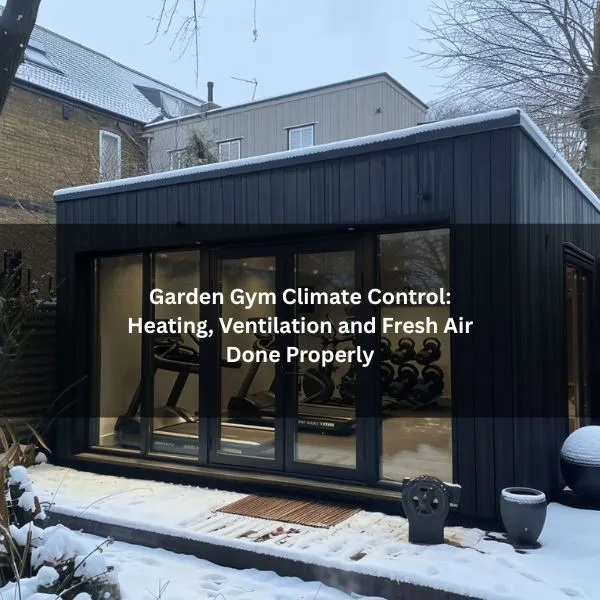
A garden gym can be one of the best upgrades you make to your home, but only if it’s comfortable enough to use year-round. The difference between a gym you love and a gym you avoid is usually climate control: fresh air, temperature stability, and keeping condensation (and smells) under control.
If you’re planning your overall setup, start with this complete home garden gym guide to sizing, layout, flooring, electrics and specification.
In this article, we’ll focus specifically on heating, ventilation and cooling, with practical options that work in UK conditions.
Why climate control matters in a garden gym
A gym is not like a spare office. You generate heat and moisture quickly, even in winter. A short session can raise humidity enough to create condensation on cooler surfaces (especially glazing), and a warm, sealed room can feel stuffy or even dizzying during intense workouts.
Getting climate control right helps you:
Train comfortably in every season
Prevent condensation and the mould risk that comes with damp air
Reduce odours from sweat and kit
Protect finishes and flooring so the space stays fresh and clean
If your garden gym includes rubber flooring, ventilation becomes even more important. Rubber tiles are hard-wearing and easy to clean, but a poorly ventilated room can trap humid air and sweat smells. Consistent fresh airflow helps the room dry out faster, which makes it easier to keep the floor hygienic and odour-free. (If you’re choosing floors, here’s your rubber tiles guide for home gyms.
Fresh air basics: trickle vents and background ventilation
The simplest and most overlooked part of climate control is background ventilation. In the UK, gyms often fail because people build a well-insulated room and then “seal it up” with no reliable air change.
Trickle vents: what they do (and what they don’t)
Trickle vents are small vents built into window frames that provide a controlled, low-level flow of outside air. They’re useful because they:
keep a baseline level of fresh air moving
reduce stale air build-up when the room is closed
help manage humidity day-to-day
But trickle vents are not a full solution on their own for a gym. During workouts, you’ll usually need either:
additional ventilation via windows, or
mechanical extraction/ventilation (covered below)
Best practice: treat trickle vents as your “always on” layer. They’re your minimum standard, not your performance system.
Smart airflow design: raised windows and cross-ventilation
If you want simple, low-running-cost cooling, window placement matters more than most people realise.
Raised windows: why high-level openings work
A raised window (or any high-level opening) is useful because warm air rises. Opening a higher window helps vent hot air out quickly, especially after a session.
High-level openings are also good for privacy. In a garden gym room, you often want daylight without feeling overlooked. Raised windows can give you that while still allowing effective ventilation.
Cross-ventilation: the easiest “cooling upgrade”
Cross-ventilation means having openings on different sides (or at least different heights) so air can move through the room rather than just in and out of the same spot.
Practical ways to create cross-ventilation:
one opening window on one wall + another opening window/door on the opposite side
a high-level window plus a lower opening (even on the same elevation)
opening a door briefly after training to purge humid air (useful, but not the only strategy)
Key point: in summer, you want airflow while you train. In winter, you want a way to vent moisture without making the room freezing. That’s where mechanical options come in.
Mechanical options: extract fans and MVHR
When you want reliable airflow regardless of weather, mechanical ventilation is the grown-up answer.
Extract fans: simple and effective
A well-chosen extract fan can pull warm, humid air out during and after a workout. It’s especially helpful if:
you train with the door shut (noise/privacy)
the room has limited opening windows
you want predictable moisture control in winter
The best setups pair extraction with a way for fresh air to enter (for example, trickle vents or a slight opening window). Without an air supply, extraction can be less effective.
MVHR: the premium “fresh air without heat loss” option
MVHR (Mechanical Ventilation with Heat Recovery) continuously brings fresh air in and extracts stale air out while transferring heat from outgoing to incoming air. In plain terms: it helps you keep the room fresh without dumping all your warmth outside.
MVHR can be a strong option if:
you plan to use the gym frequently through winter
you want the room to stay comfortable and dry with minimal manual window opening
you’ve built a well-sealed, highly insulated garden room (common with SIP construction)
It’s not essential for every gym, but if you want that “always comfortable” feel, MVHR is worth considering.
Heating and cooling: when air conditioning makes sense
Heating: aim for “warm enough to start”, not “tropical”
For gyms, the most practical approach is often to heat to a comfortable baseline (so you don’t dread going in), then let your workout maintain the temperature.
Common heating options include:
Infrared panels (fast comfort feel, good for warm-up zones)
Electric radiators (steady background warmth, simple control)
Air conditioning (heat pump) (heating + cooling in one system)
Your choice depends on how you train and how often you use the space. If you only train a few times a week, simple electric heating can be fine. If you’re in there most days and want comfort on demand, a heat pump/AC unit starts to make more sense.
Cooling: why AC can be worth it in a garden gym
If your gym gets strong sun, has big glazing, or you do intense training in summer, air conditioning can turn the room from “unusable for weeks” into “comfortable all year”.
AC makes sense if:
the room overheats even with windows open
you want to train with doors/windows closed (security, noise, privacy)
you want fast dehumidification (great for post-workout moisture control)
A bonus: AC units typically have a dehumidify mode, which helps reduce lingering humidity after training — another tool for controlling odours and keeping the room feeling clean.
A simple, effective strategy (most people should follow)
For many garden gyms, a balanced approach looks like this:
Trickle vents for baseline fresh air
Raised windows (or opening windows) for quick purge ventilation
Extract fan for predictable moisture removal
Heating for a comfortable starting temperature
Optional AC if overheating is a real summer problem
Bringing it together: climate control that actually works for home gym rooms
A proper garden gym should feel fresh when you walk in, not stale. It should dry out quickly after training, not stay humid for hours. And it should be comfortable enough that you don’t skip sessions because the room is too hot, too cold, or smells “gym-y”.
If you’re building your gym room from scratch, plan climate control early, it’s much easier to get right during design than as a retrofit. And remember: good ventilation doesn’t just improve comfort; it helps protect your finishes and makes keeping your rubber floor tiles fresh much easier because moisture and sweat odours don’t linger in the space.
For the bigger picture, size, layouts, flooring choices and overall spec, use the full guide here: https://myouthouse.co.uk/blog/garden-gym-room-guide/