


Table of Contents
- Occasional Guests vs a Garden Room Built for Sleeping
- How Do Permitted Development Rights Affect Sleeping?
- When Does a Garden Room Start Looking Like Accommodation?
- Why Building Regulations Matter Even for Small Rooms
- What Makes Occasional Overnight Use Comfortable?
- Before You Offer the Room to Guests
- What If You Want a Guest Annexe or Holiday Let?
- Keep the Purpose Clear From the Start
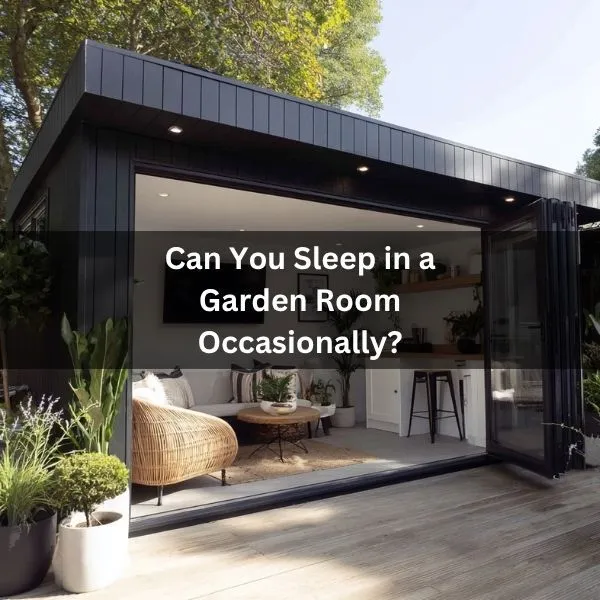
The spare bedroom is taken, friends are visiting, and your garden room has a comfortable sofa bed. Could someone stay overnight without needing planning permission?
Yes, you can generally sleep in a garden room occasionally. That’s different from using it as a permanent bedroom or separate home. However, its design and use matter. Planning rules and Building Regulations treat sleeping accommodation differently from an ordinary office or gym.
Here’s what to consider before offering it to guests.
Occasional Guests vs a Garden Room Built for Sleeping
Imagine a garden studio used for painting. A relative sleeps on its sofa bed one night, then it returns to being a studio.
That’s different from installing a permanent bed or having someone live there for months. The latter arrangements suggest the room is becoming accommodation.
There isn’t a fixed number of nights that determines whether sleeping is permitted. Intended use, facilities and actual occupation all matter.
An occasional stay may raise no planning issue, but the space must still be safe.
How Do Permitted Development Rights Affect Sleeping?
In the UK, many garden rooms can be built without a planning application under Permitted Development Rights. These normally cover buildings used for purposes incidental to the enjoyment of the main house.
Examples include an office, gym, games room or studio. The rules don’t generally cover separate homes or primary living accommodation, such as a bedroom.
A fold-out sofa in a hobby room doesn’t automatically make it a dwelling. But calling a purpose-built bedroom a ‘garden office’ won’t necessarily make it Permitted Development.
If regular overnight stays are part of your plans from the start, check the proposal with your local planning authority rather than assuming the usual outbuilding rules apply.
When Does a Garden Room Start Looking Like Accommodation?
The change can be gradual. An occasional guest space becomes a dedicated bedroom, then somewhere a relative stays for months.
Look at how these situations differ:
- An occasional guest: Someone sleeps on a sofa bed once in a while, while the room’s main purpose remains an office or leisure space.
- A regular bedroom or guest annexe: The room is furnished and used primarily for sleeping. Planning permission may be required, even if the person also uses the main house.
- Independent accommodation: A permanent sleeping area combined with a kitchen, bathroom and separate day-to-day living arrangements is more likely to be treated as self-contained residential accommodation.
Councils consider the actual circumstances, so seek advice before converting a garden room into a bedroom.
Why Building Regulations Matter Even for Small Rooms
Planning controls the building and its use. Building Regulations govern construction safety.
The normal exemptions for small detached outbuildings specifically depend on there being no sleeping accommodation.
For example, a detached garden room under 15m² is normally exempt from Building Regulations for the building itself if it has no sleeping accommodation. For buildings between 15m² and 30m², exemption also depends on boundary distance or substantially non-combustible construction, as well as having no sleeping accommodation.
Don’t assume a small room is exempt if you’re designing it for sleeping. Ask building control, even if guests would stay only occasionally.
Depending on the proposal, requirements can involve:
- Fire safety: Appropriate fire protection, detection and a safe way to escape.
- Ventilation: Fresh-air provision and measures to manage condensation.
- Insulation and heating: Suitable construction for comfortable, safe overnight use.
- Electrics and structure: Safe installations and a building designed for its intended occupancy.
What Makes Occasional Overnight Use Comfortable?
A room that’s comfortable by day may be different overnight. Temperatures drop, windows stay closed, and emergency exits matter.
Consider whether guests can open the door easily from inside, find the way back to the house after dark and stay warm without relying on an unsuitable portable heater. Smoke detection and the arrangement of doors and windows also deserve attention.
Good insulation helps, but it shouldn’t come at the expense of ventilation. A well-designed room needs to manage moisture, particularly when windows stay closed through a cold night.
Think about the walk back to the house, too. Guests may need the toilet after dark, so a well-lit, unobstructed path matters. A garden room that works perfectly for afternoon yoga may need a few adjustments for overnight comfort.
Discuss possible overnight use with your designer early. Safety measures are easier to plan before construction.
Before You Offer the Room to Guests
Start with any planning paperwork for your existing garden room. An approval may include conditions limiting its use. If guests are likely to stay repeatedly, ask your council’s planning team whether the proposed arrangement changes the planning position.
Separately, ask building control whether your plans amount to providing sleeping accommodation. Describe the actual layout and facilities, not just the label ‘garden room’. If you’re still choosing a design, having these conversations early can save expensive alterations later.
What If You Want a Guest Annexe or Holiday Let?
An annexe is different from giving a friend somewhere to sleep.
If you’re considering a bedroom with its own bathroom or kitchenette, tell your designer and council at the outset. The facilities and intended use may mean planning permission is required, alongside Building Regulations approval. A bathroom or kitchen doesn’t automatically create a separate dwelling, but a fully independent arrangement is likely to receive closer scrutiny.
Renting to overnight guests raises further planning, safety and legal questions. Permission for a garden office doesn’t automatically cover holiday accommodation.
Keep the Purpose Clear From the Start
An occasional night on a sofa bed is different from creating a permanent bedroom. The question is whether sleeping becomes the room’s intended purpose.
If overnight use is planned, check with your council and building control before making changes.
At My Outhouse, we build bespoke, fully insulated garden rooms across the South East. For a peaceful retreat or flexible family space, contact our team to discuss your plans.