


Table of Contents
- Key Takeaways
- What Causes Condensation in a Garden Room Gym
- Is It Condensation or a Leak? Quick Checks
- Hit the Right Humidity Target (and Measure It)
- Vent Your Home Gym the Right Way
- Add Trickle Vents for Steady Background Airflow
- Use an Extractor Fan for Post-Workout Purge
- Stabilise Temperature With AC or Dehumidification
- Conclusion
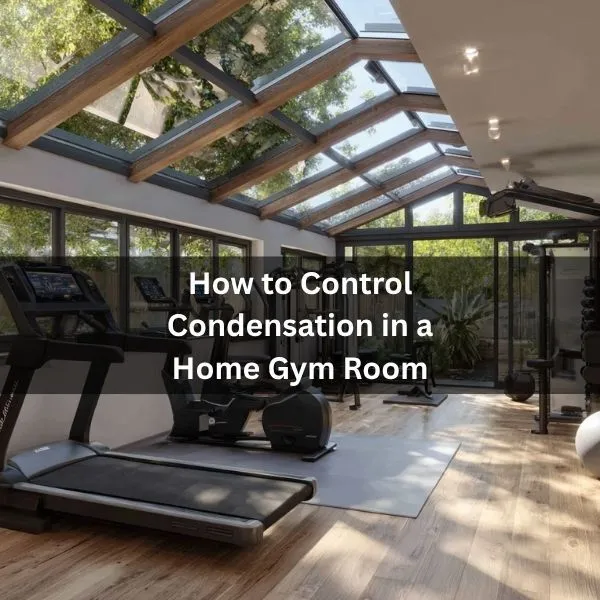
If your garden room gym’s glazing is misting up, you’re trapping warm, wet air against cold surfaces. You fix that by sealing doors and windows properly, then adding controlled airflow with trickle vents and a fast extractor fan after workouts. Keep the temperature steady with AC (or dehumidification) so humidity doesn’t spike and crash.
Key Takeaways
- Measure humidity with a digital hygrometer and keep RH below 60% to minimise condensation and musty smells.
- Improve insulation and upgrade to quality, well-sealed doors and double-glazed windows to keep internal surfaces warmer.
- Use trickle vents for continuous airflow, ideally at high levels and on opposite sides, to create steady cross-ventilation.
- Fit an extractor fan with a timer or humidity sensor to quickly clear moisture after workouts and towel drying.
- Add AC or a dedicated dehumidifier to stabilise temperature, remove moisture, and prevent overnight spikes in condensation.
What Causes Condensation in a Garden Room Gym
When warm, moisture-laden air hits a colder surface in your garden gym building, the water vapour in that air condenses into droplets, usually on windows, metal kit, and any uninsulated wall or ceiling panel.
You create that warm, wet air every time you train: breathing hard, sweating, drying towels, and storing damp mats. Hot showers in the house can add moisture if you enter straight after.
Cold surfaces drive the problem. Poor insulation, thermal bridges at studs and window frames, and single- or low-spec glazing stay cooler than the room air.
Overnight temperature drops make it worse, especially if you only heat the room during workouts. Airtight rooms without planned ventilation trap humidity, so it builds up session after session.
Even a small, steady moisture source becomes a problem when air can’t escape, and surfaces can’t stay warm.
Is It Condensation or a Leak? Quick Checks
Although damp patches often look the same at first glance, you can usually tell condensation from a leak with a few fast checks before you start ripping panels off.
First, wipe the area dry and mark the edge with a pencil. If it reappears evenly as a fine film on cold surfaces (glass, metal fixings, uninsulated corners), that’s condensation. If it returns as a spreading stain from one point, suspect a leak.
Next, check timing: does it show up after workouts, showers in the house, or big temperature swings? Condensation follows activity and cold snaps. Leaks don’t care.
Look above the patch: inspect roof joints, guttering, flashing, and door thresholds for gaps, cracked sealant, or fasteners. Press tissue to suspected joints; a leak will wet it from one line.
Finally, sniff and feel: musty, widespread damp suggests condensation; a single cold drip line suggests water ingress.
Hit the Right Humidity Target (and Measure It)
Put a small digital hygrometer at head height, away from doors, heaters, and direct sun.
Take readings before training, right after, and an hour later; that tells you whether moisture lingers or clears naturally.
If RH sits above 60% for long, you’ll get condensation on cold surfaces and that musty smell. Lower it with a dehumidifier and by drying towels, mats, and kit outside the room.
If RH drops below 40%, you’ll feel scratchy air and static back off the dehumidifier or add a small humidifier in winter.
Log numbers for a week to spot patterns and adjust quickly.
Vent Your Home Gym the Right Way
Even if you’ve nailed the humidity target, you still need steady air changes to stop moisture pooling on cold glass, corners, and behind the kit.
Don’t rely on “cracking a window” once in a while; you need a repeatable routine that matches training load and weather.
After every session, purge the room fast: open the main door and a window on the opposite side for 5–10 minutes to create a clear cross‑draft.
Keep internal doors open so damp air doesn’t get trapped in a lobby or storage nook.
On cold days, ventilate in short, sharp bursts rather than leaving windows ajar for hours, which chills surfaces and invites condensation later.
Before training, do a 2–3 minute air swap to start dry.
If you smell stale air or see misting, you’re under ventilating your home gym, so act immediately.
Dry air in, damp air out, every time.
Add Trickle Vents for Steady Background Airflow
When you can’t babysit windows all day, trickle vents keep fresh air moving in the background so humidity doesn’t quietly build between sessions. Fit them to your frames or choose windows and doors with integrated vents, then leave them cracked open year-round for a controlled, low-draught exchange.
Place vents high, where warm, moist air naturally gathers, and pair them with a clear path for air to travel across the room. If you’ve got vents on only one side, you’ll get less movement, so aim for two-sided airflow when you can.
In winter, don’t slam them shut; reduce the opening instead so you still dilute moisture without freezing the room. Keep them clean: a quick vacuum of the grilles and a wipe of the insect mesh stops blockages that kill airflow.
If you notice condensation on cold mornings, open the vents a notch more.
Use an Extractor Fan for Post-Workout Purge
After a hard session, kick moisture out fast with an extractor fan instead of letting it linger on cold glass and walls. Sweat, breath, and damp towels dump litres of water into the air, and a quick purge prevents that vapour from condensing into droplets.
Fit a wall or ceiling extractor rated for the room size, with a backdraft shutter to prevent cold air from blowing back in. Put it on a timer or humidity trigger so you can hit one switch and walk away.
Run the fan during training and for 20 to 30 minutes after. Open a window or your door a crack to give it make-up air; extraction without an inlet barely moves moisture. Aim the outlet away from soffits and cladding joints.
Wipe down the kit, hang the towels, then purge. Do this every session, and condensation drops fast, even in winter.
Stabilise Temperature With AC or Dehumidification
Because warm air can hold more moisture than cold air, you’ll slash condensation by keeping your garden room gym’s temperature steady with a small AC unit or a dedicated dehumidifier.
Aim for consistency, not tropical heat: set a modest target and let it run through your workout and cooldown so surfaces don’t swing from cold to warm.
If you choose AC, use “dry” mode when available; it pulls water from the air while smoothing temperature spikes.
Keep doors and windows shut while it’s running, and make sure the condensate drain is clear.
For a dehumidifier, size it for the room, place it away from walls, and route the hose to a drain so you don’t have to empty the tank daily.
Set the humidistat around 50–60% RH.
Run it before training, then keep it on for an hour after.
This stops fogged windows and dripping corners fast. A good dehumidifier can also stop smells from setting into your home gym.
Conclusion
You can’t “wipe away” gym condensation. You’ve got to control humidity and temperature. Seal up quality doors and windows, then ventilate on purpose: keep trickle vents open for steady airflow, crack windows briefly, and run an extractor fan after every session. If you think AC is overkill, picture finishing a hard workout and not seeing wet panes or smelling damp gear. AC (or a dehumidifier) keeps the room stable so moisture can’t build up.
For a full routine, follow this garden room gym cleaning guide.